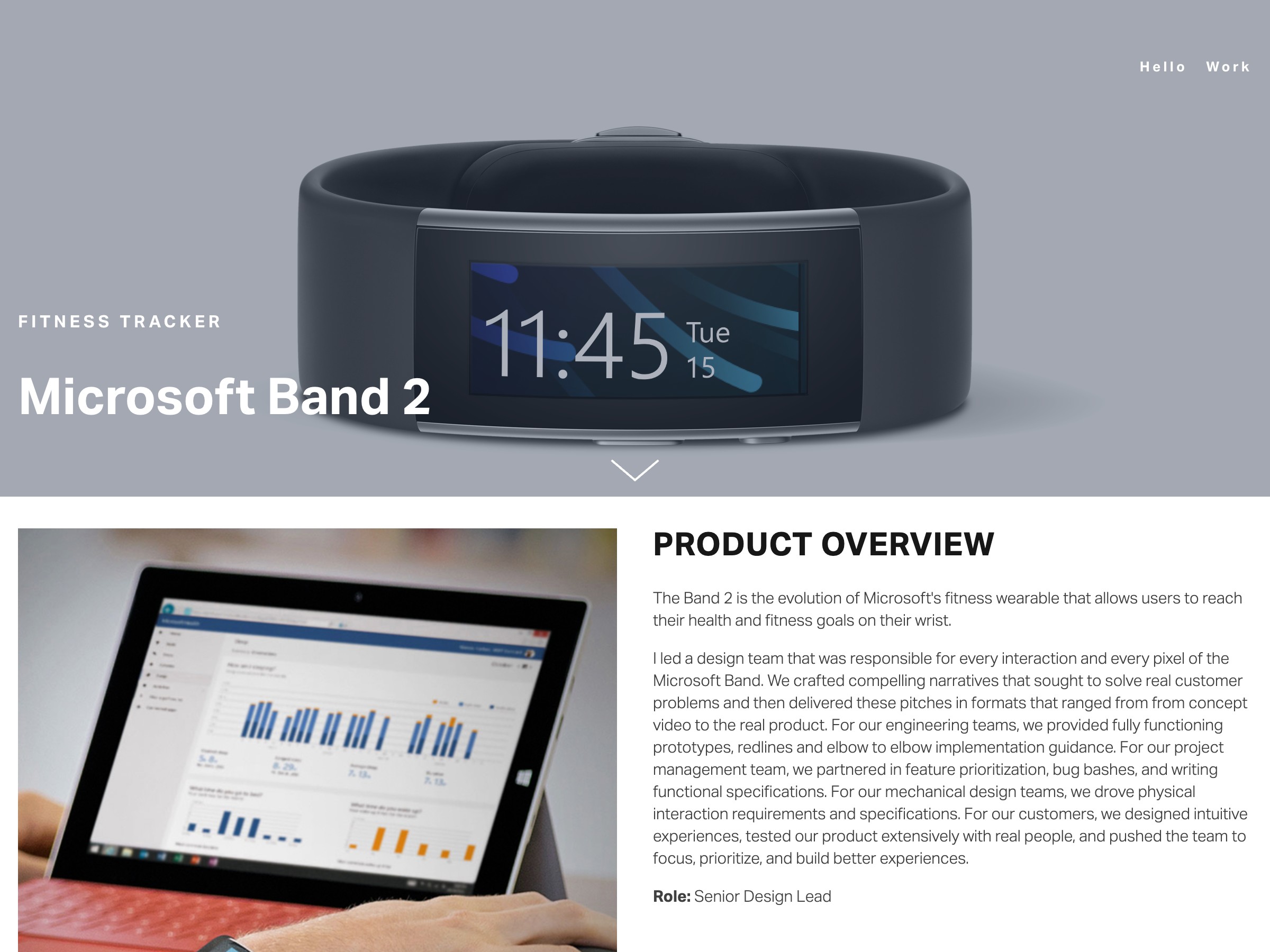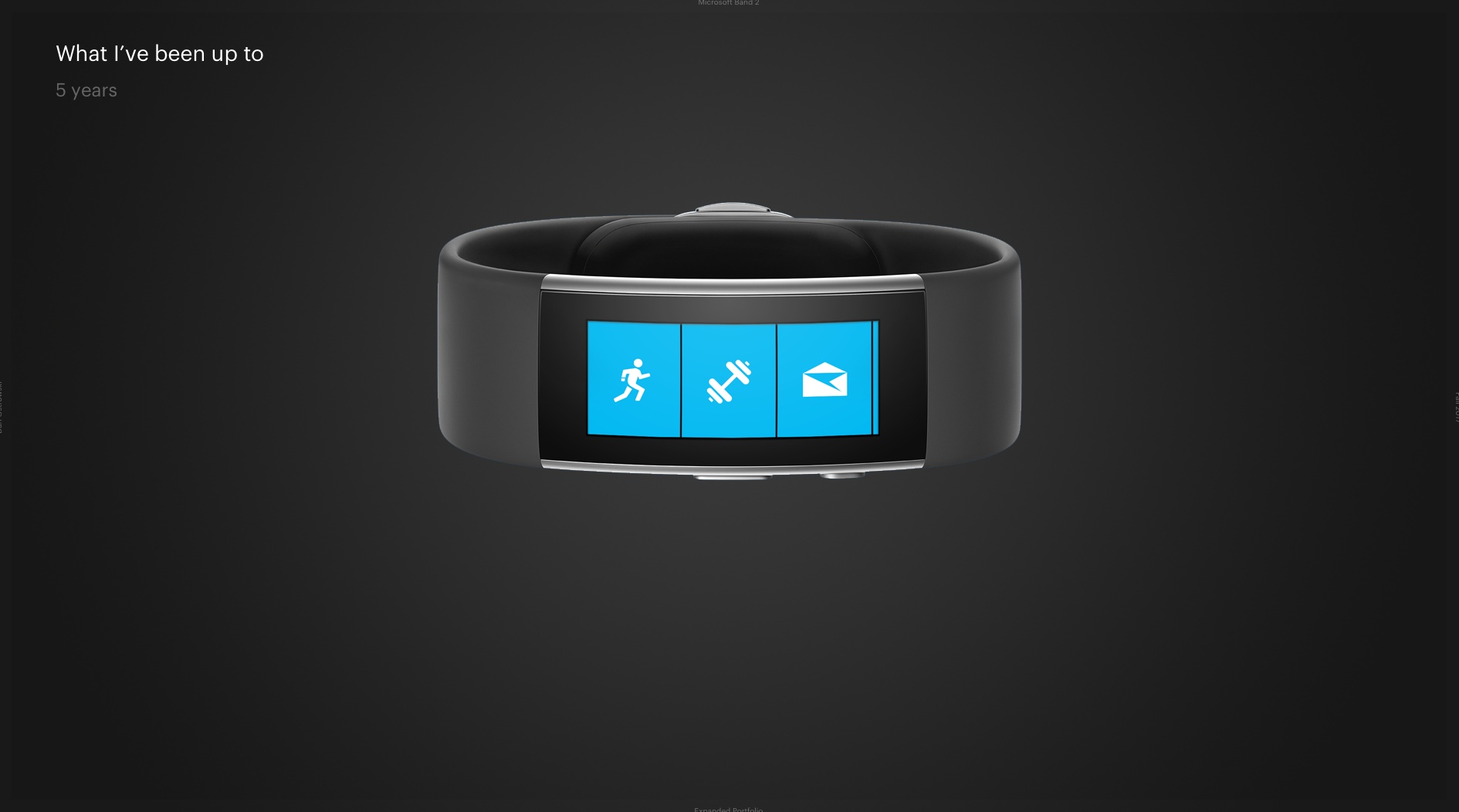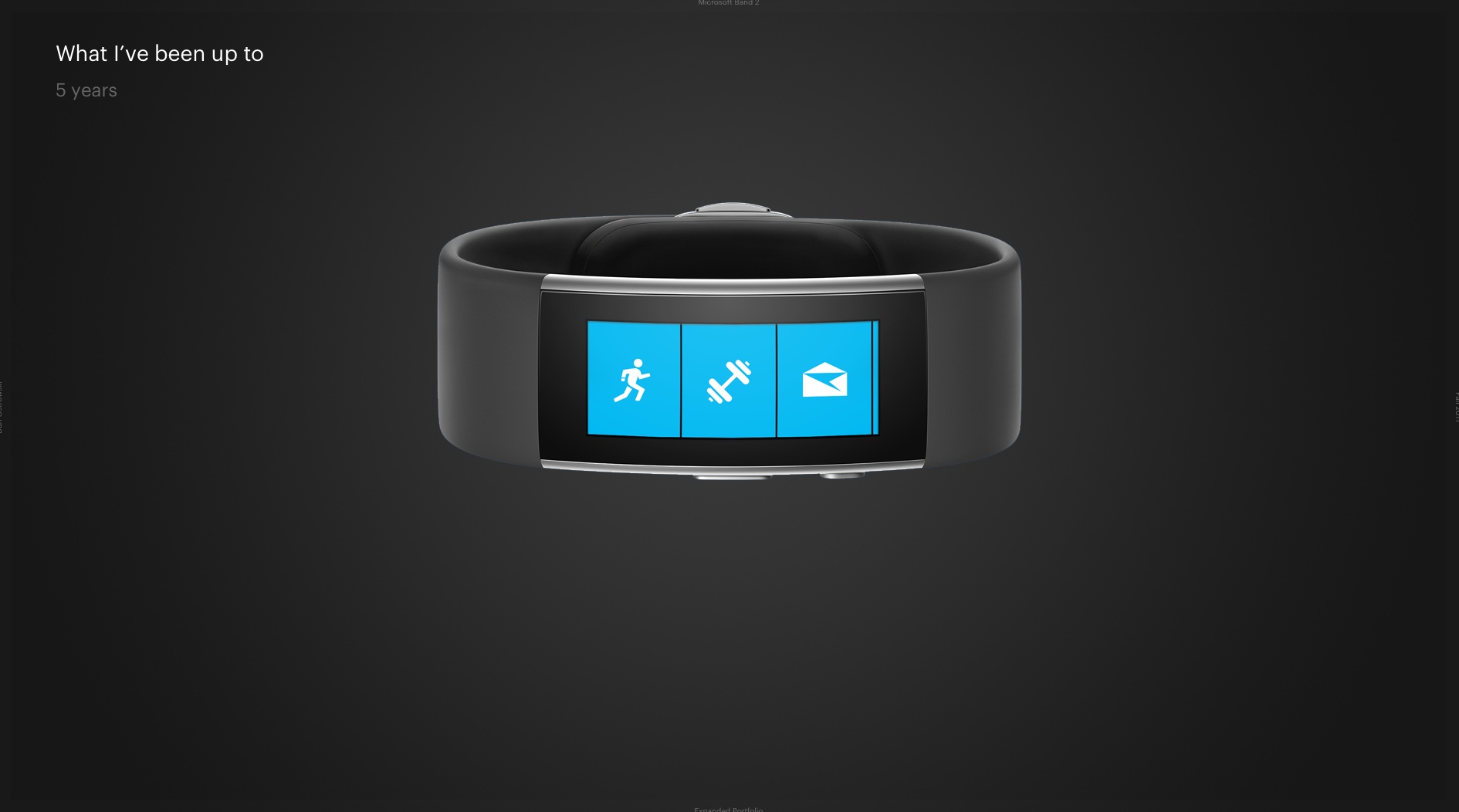
Microsoft Band 2
Band 1 proved the paradigm. Band 2 was about making it robust — scaling the input system, leading a design team, and learning that a decision made in one corner of a product propagates everywhere.
By Band 2 I had grown from the first designer on a three-person incubation team to leading the design team for the full product. The hardware was more refined — a curved display, a more ergonomic form factor, better sensors. The design challenge shifted from invention to execution at scale.
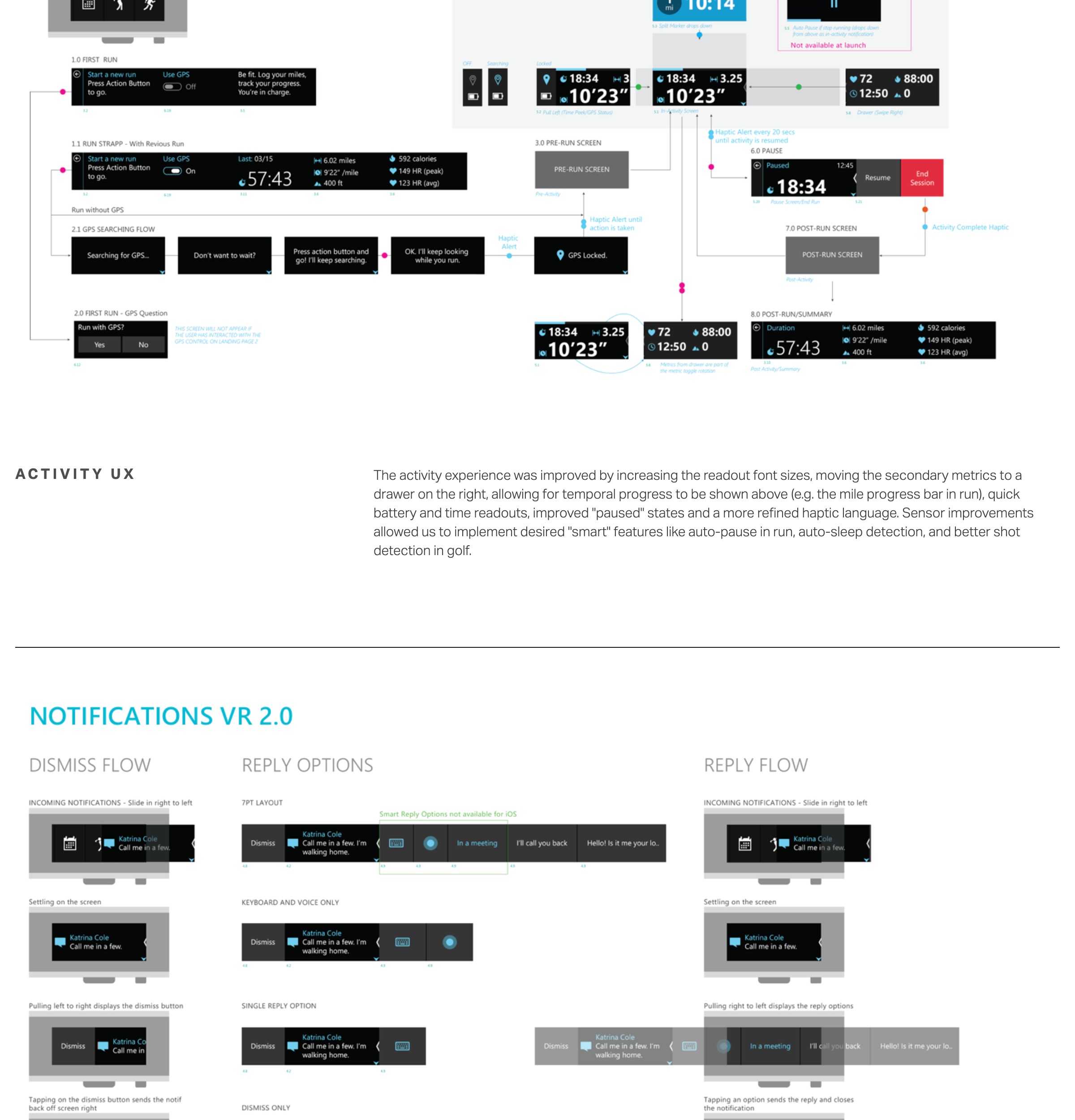
The input paradigm from Band 1 carried forward. The task was making it reliable across a much broader user population, a wider range of use cases, and a more complex feature set — including new workout types, Cortana integration, and a significantly expanded notification system.
Design Leadership at Scale
Leading the Band 2 design team meant thinking about design decisions differently. On Band 1, a choice I made would show up in one place. On Band 2, a choice I made in one experience — say, the interaction model for pull-based controls in the golf experience — would propagate across the entire product system.
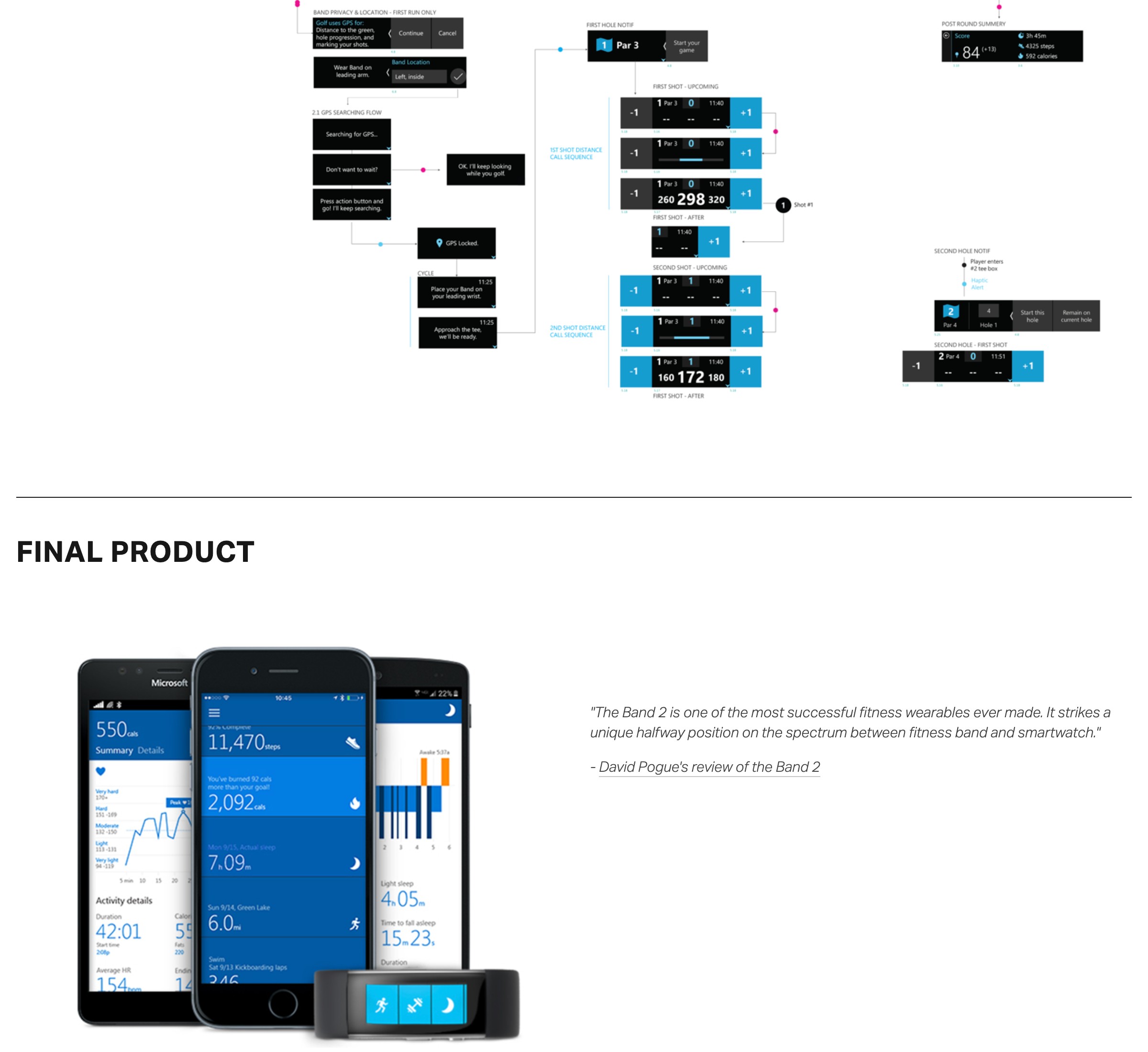
The golf experience is a good example. Golfers need to track shot distance, club selection, and course position — all while walking a fairway with their hands occupied. We designed a pull-based interaction where the user could access contextual data with a single wrist rotation and a thumb drag, without stopping or looking away. The gesture model we developed for this became the foundation for how the entire Band 2 navigation system worked.
That's a Director-level observation that I only understood by being in it: the micro-decisions you make in a single experience become the macro-architecture of the product. Getting a golf interaction right wasn't just about golf. It was about defining how a human navigates a wrist-worn computer.
The Health Ecosystem
Band 2 wasn't just the device — it was the center of a health platform that included iOS, Android, and Windows Phone apps, a web dashboard, and an SDK for third-party developers. I led design across all surfaces, ensuring the experience felt coherent whether you were checking your sleep data on a phone or reviewing your running history on a browser.
The design language we established — a dark, data-forward aesthetic with glanceable metrics at the top level and deeper drill-downs behind them — was informed by the constraints of the Band display and then carried into larger screens. The Band dictated the hierarchy because it had the tightest constraints.
External Validation
David Pogue, then at Yahoo Tech, called Band 2 "the most sophisticated fitness band yet." That mattered less to me than the internal signal: the design system we built held up at scale, across a team, across multiple surfaces, and across a product that had grown significantly from its incubation origins.
Design decisions made in one experience propagate across the entire product system. Getting the micro-interaction right isn't just about the micro — it's about what it will become when it scales.
What Came Next
Microsoft Band was discontinued in 2016. The Health Incubation team moved into exploring concept experiences for the medical patient space — work that anticipated by several years the convergence of consumer wearables and clinical care. That work informed what I brought to Katalyst the following year: the question of how physical sensing systems should behave when the stakes are higher than step counts.