Motus
Motus started as a video hosting platform. The question I brought to it: what happens when the camera works both ways?
Motus was Google's internal AI-powered fitness platform — a live-class and on-demand workout system built by Googlers for Googlers. When I joined as a 20% project designer, it was a well-organized video streaming service. Instructors taught classes. Users watched them. The experience was good. It wasn't a product.
The gap was obvious: the platform had a camera pointed at the user and did nothing with it. Every piece of hardware required for AI coaching already existed in the user's setup. The only missing piece was the design.
The Design Question
At Katalyst, a human trainer guided the experience. The trainer watched, adjusted, corrected, encouraged. At Motus — an on-demand fitness platform with no live instructor — the trainer role had to move into the software itself.
This was the same question I'd asked at Katalyst, restated for a different context: what if instead of designing a tool for a trainer to use, I designed a system that embedded the trainer's intelligence directly? The physical sensing hardware was the user's camera. The expertise to embed was movement coaching. The design problem was making that coaching feel present and responsive rather than mechanical and intrusive.
The AI Coach
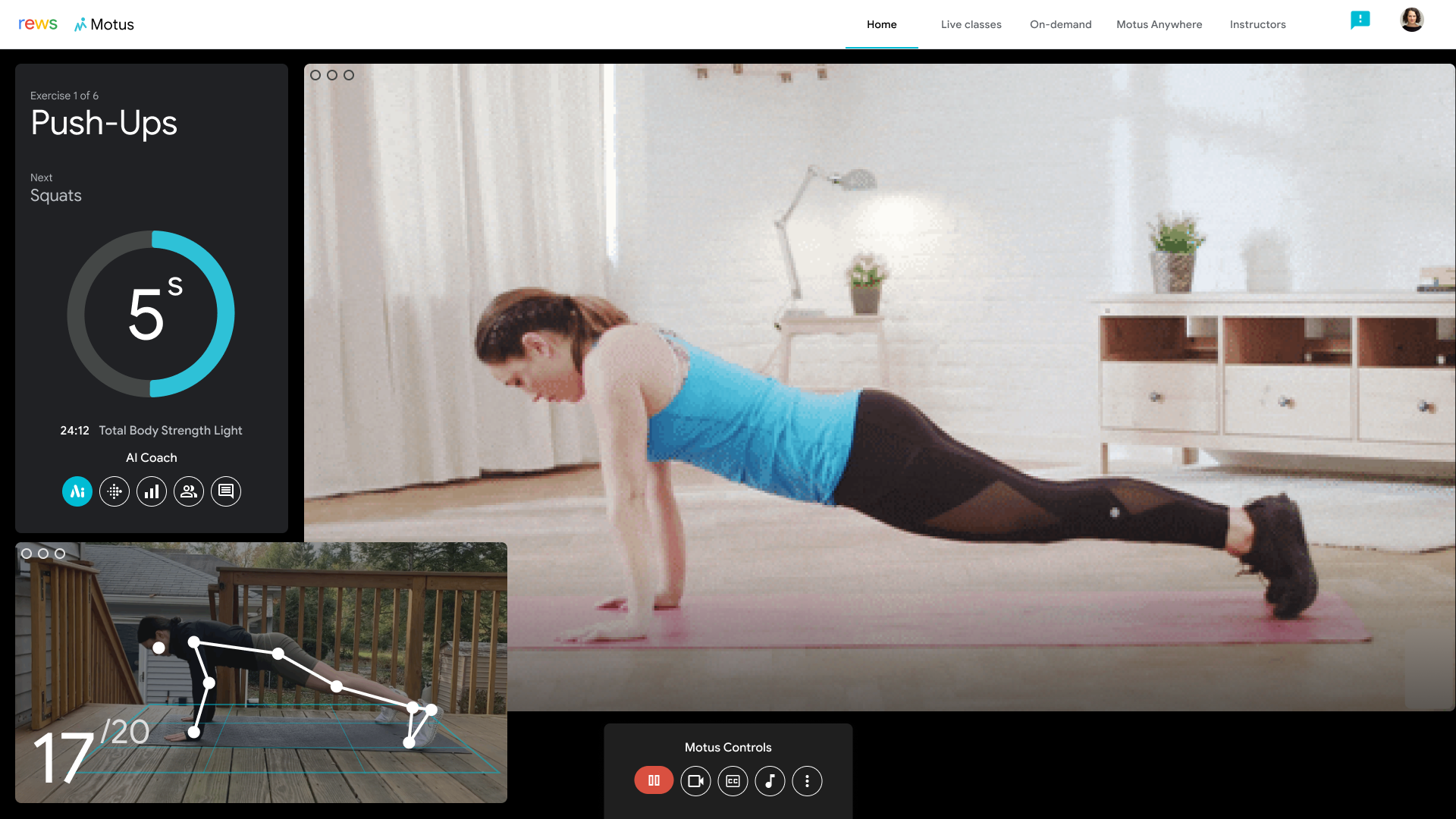
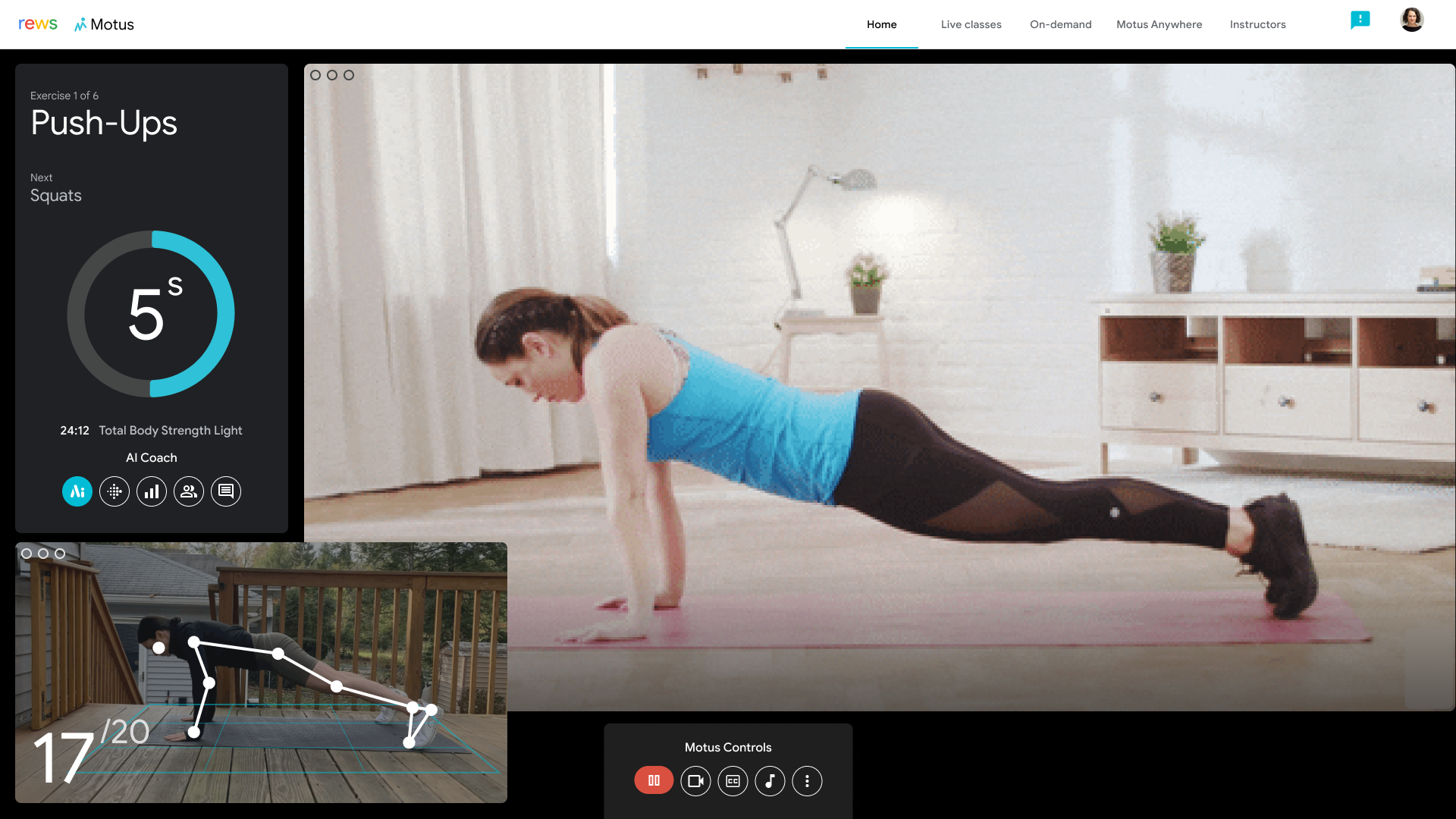
The AI Coach used computer vision — body landmark detection via the user's camera — to provide real-time movement feedback during workouts. The system tracked pose, counted reps, detected form errors, and surfaced corrections without interrupting the workout flow.
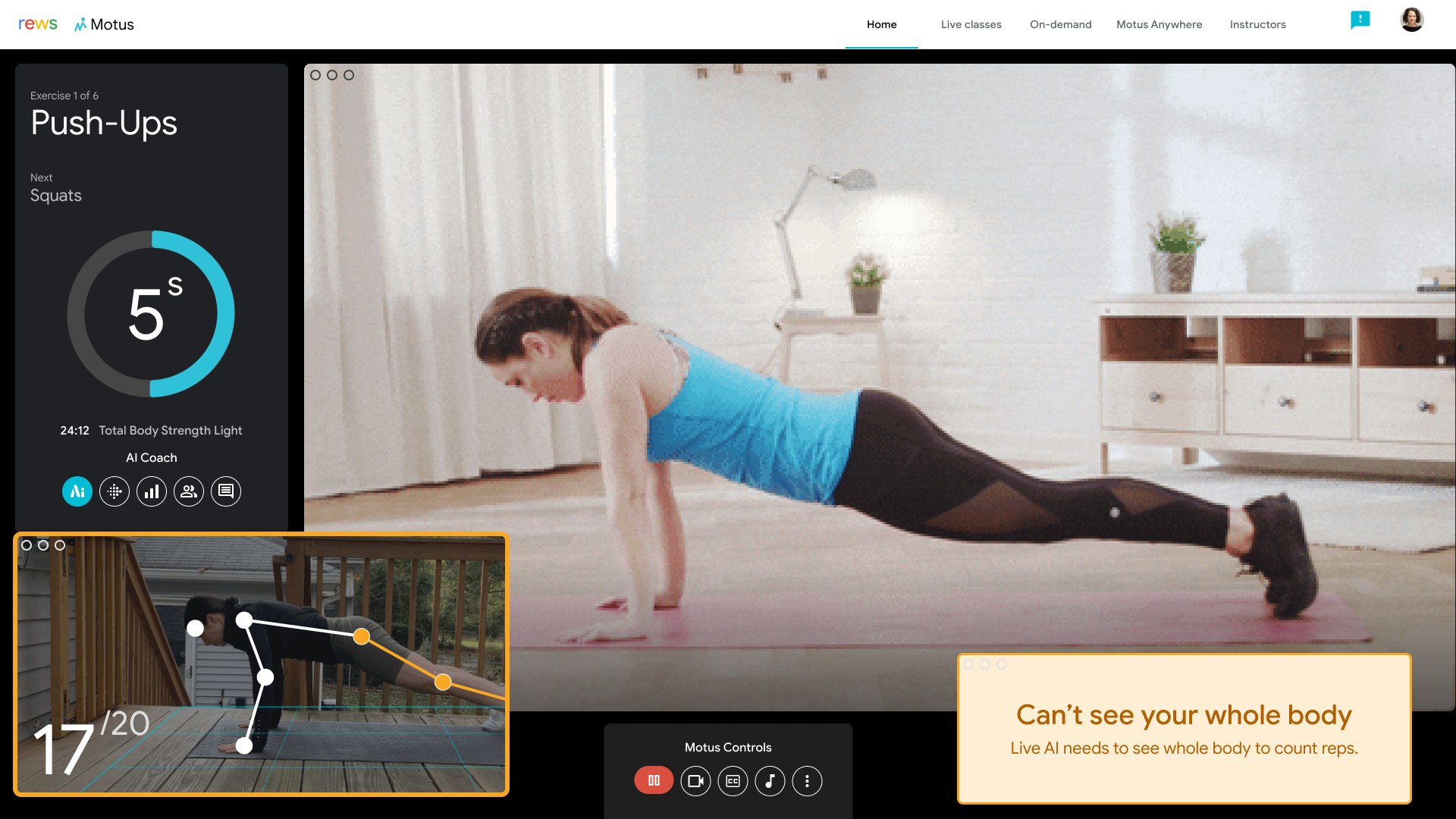
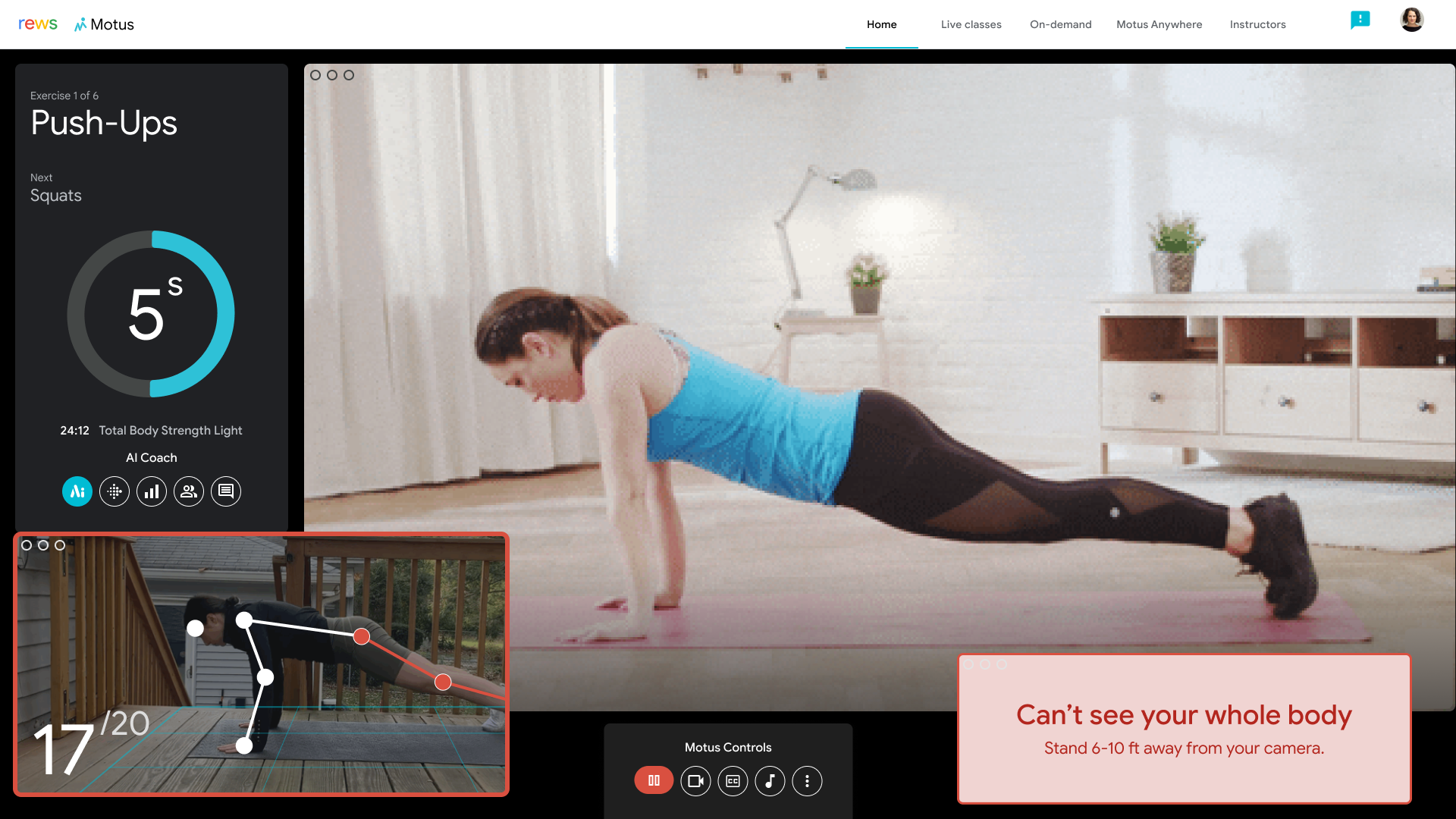
The hardest design problem was graceful degradation. The AI Coach could only do its job if it could see the user clearly. When it couldn't — body out of frame, low light, camera obscured — it needed to communicate that failure without breaking the session experience.
I designed a three-tier warning system:
- Yellow — Advisory: AI Coach visibility is reduced. Rep counting may be inaccurate. User is informed but the session continues uninterrupted.
- Red — Warning: AI Coach cannot see the user. "Stand 6–10 ft away and make sure your whole body is visible." Displayed prominently but doesn't halt the session.
- Auto-pause: Camera is off or fully obstructed. Session pauses automatically until visibility is restored.
This is the Boeing principle applied to consumer fitness AI: automation is the easy part — design for the moment it fails. The tiered system meant users always knew what the AI was doing and why, and could recover without frustration.
Fitbit Integration
The second major design contribution was connecting Fitbit biometric data into the Motus post-class experience. Fitbit data — calories burned, heart rate zones, performance percentile, muscle group coverage — was available to every Googler but was disconnected from their workout experience. It lived in the Fitbit app, not in Motus.
I designed the integration layer that brought this data into the Motus post-class insight summary: active minutes, workout streak, calories alongside AI Coach form scores, performance percentile relative to similar users, and a muscle group coverage map showing what had been worked in the session.
This drew directly on the Band years. I understood biometric hardware data at a level that most software designers don't — what heart rate zones mean at different fitness levels, what calorie data can and can't tell you, how to present performance metrics without creating anxiety in non-athletic users. That background made the integration design substantive rather than decorative.
Onboarding
The AI Coach needed calibration data to be useful. Height, fitness level, class preferences, and equipment availability all affected how the system set baselines and delivered coaching. I designed a five-step onboarding wizard that collected this information in a way that felt like personalization rather than a setup form — each step framed around what the user would get from it, not what the system needed from them.
What This Built Toward
Motus was the first project where the two halves of the career touched simultaneously. Act 1 had been about physical systems — sensors, constraints, bodies as interfaces. Act 2 was about knowledge systems — embedding expertise, making complexity navigable. Motus required both at once: a physical sensing system (camera + Fitbit) feeding an AI coaching layer, designed to feel like a trainer who knew your history.
The AI Coach was partially implemented before a team reorg deprioritized the project. The envisionment work — the live class interaction model, the tiered warning system, the Fitbit integration layer, the onboarding flow — was credited as the primary driver of the project's continued organizational support throughout its run.